

The new BTEC Tech Award in Art & Design is divided into two sections – Component 1, taught in year 10, and Component 2, which takes place in Year 11.
Component 1 will enable students to investigate art and design practice to inform the generation and communication of ideas, and will develop practical skills through exploration of specialist materials, techniques and processes.
BTEC describes component 1 in the following statement:
“Effective ideas in art and design are developed through practical research and
investigation. Artists and designers can generate ideas through a combination of
observation, experience and practice with art and design materials, techniques and
processes. Practitioners develop and improve their practical skills through testing and
reviewing their application of materials, techniques and processes.“
Students will develop practical research and investigation skills which will
enable them to gain an understanding of how artists and designers produce work for a
specific purpose. They will then apply practical ideas-generation techniques and learn
how to visualise and record your ideas in different ways. They will develop practical art
and design skills and explore techniques in order to communicate their creative intentions.
They will have the opportunity to work across a range of media used in art and design
practice. Taking part in workshops and classes, they will develop and practise skills with
materials, techniques and processes. Throughout their skills development, they will review their progress and consider how they can make improvements. They will then learn how to communicate their progress and outcomes to show their skills development.
Component 1 is assessed using a BTEC theme given in an assignment near the start of the Spring term. The theme is usually fairly broad, and not known to the Art teacher until it is released.
Shortly after the boys will be allocated 20 hours of lesson time to complete the assignment, before it is marked by the teacher, and then moderated by a BTEC assessor who will visit the school in May.
The assignment will be completed by filling a sketchbook, making use of the internet for research, visiting galleries outside of lesson, and creating artwork in a range of different methods – just like the normal art lessons that have already taken place.
The Assignment
The assignment is broken down into 4 tasks, that match the 4 learning outcomes of component 1, which are:
A Use investigation and experimentation processes in art and design practice
B Generate and communicate art and design ideas
C Develop practical skills through application and review
D Record and communicate skills development.
This is what the assignment will look like:
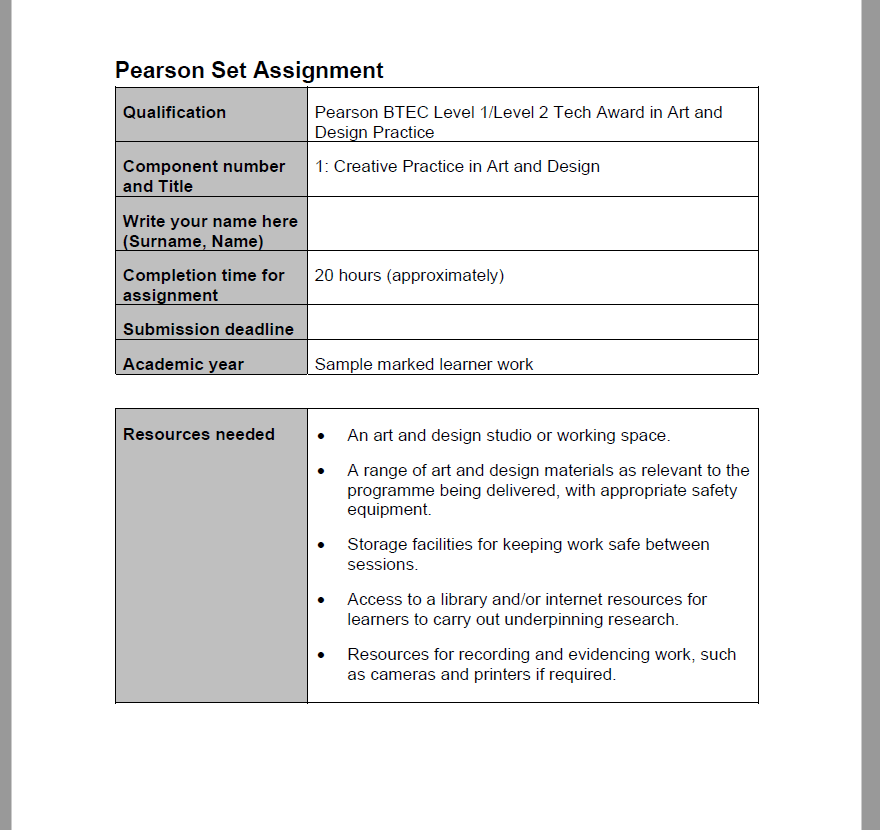

All students will be given a copy, and a digital version will be saved in their team.
The assignment then details each of the four tasks. I will give an example of each task, followed by some exemplar student work to give you an idea of what sort of outcomes would be expected. The examples i have used are of a ‘high achieving student’
Conditions & Restrictions
Before we start, this new BTEC Tech award has very clear guidelines that must be strictly adhered to by both teachers and students – largely to ensure the authenticity of all the students work. The qualification instructions clearly state the following:
1 Learners can only have access to their work under supervision
2 Any work learners produce under supervision must be kept securely between sessions and during breaks and must not be taken in or out of the sessions
3 Only permitted materials can be brought into the supervised assessment and no materials should be removed
4 Learners may conduct certain informative or practical activities outside of the classroom environment where it is not possible to do them in class, such as visiting/documenting off-site locations or events or conducting interviews.
o They may bring the resulting materials into the supervised assessment
o These materials must be checked to ensure they do not contain any pre-prepared
responses or outcomes to tasks and must be authenticated as the learner’s own work
o This may be done through meaningful dialogue with learners about the work, how it
was produced and how they intend to use it towards the assessment
5 During supervised sessions, learners must work independently and cannot work with or discuss their work with other learners unless group or collaborative work is required or permitted
6 Learners can access the internet for the purposes of research and/or to enable the use of software that relies on connection to the internet, but this must be monitored by the teacher
7 When providing structure to support learners in producing appropriate research and support notes during the supervised period, teachers must follow the guidelines for feedback & avoid overdirection
8 Once an assessment has begun, learners must not be given feedback that relates specifically to their evidence and how it can be improved, as learners must work independently
9 learners cannot receive any guidance or instruction about how to improve work to meet mark bands or solutions to questions or problems in the tasks
10 learners may produce notes as part of their practical/exploration sessions and these notes can be used to generate their final portfolio of work. Learner must not however be given any support or feedback in writing or editing notes
Now, lets look at each task in detail:
Task 1 Investigation (Learning Outcome A)
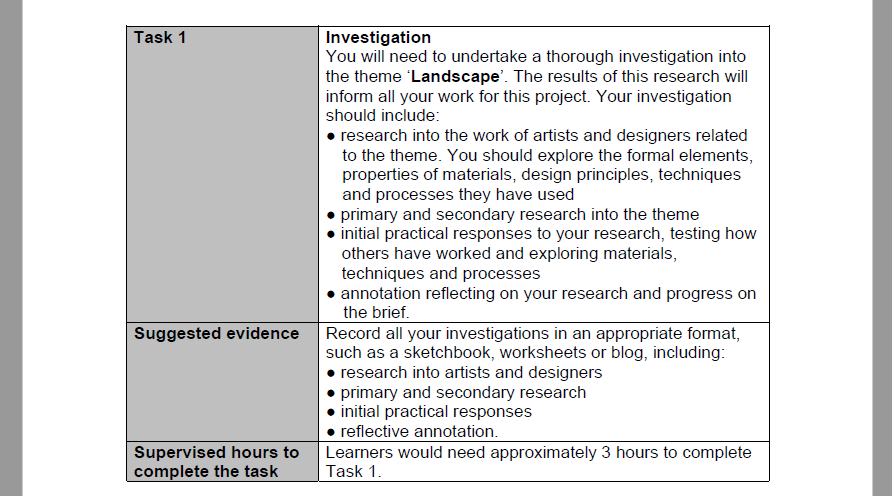
Examples of student work for task 1:
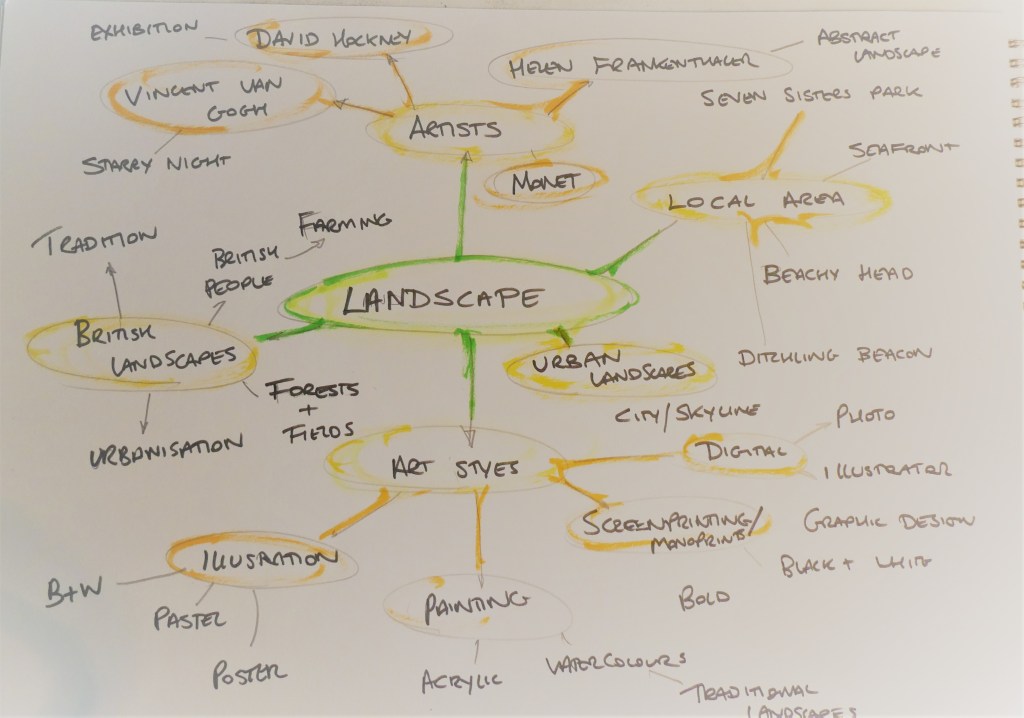
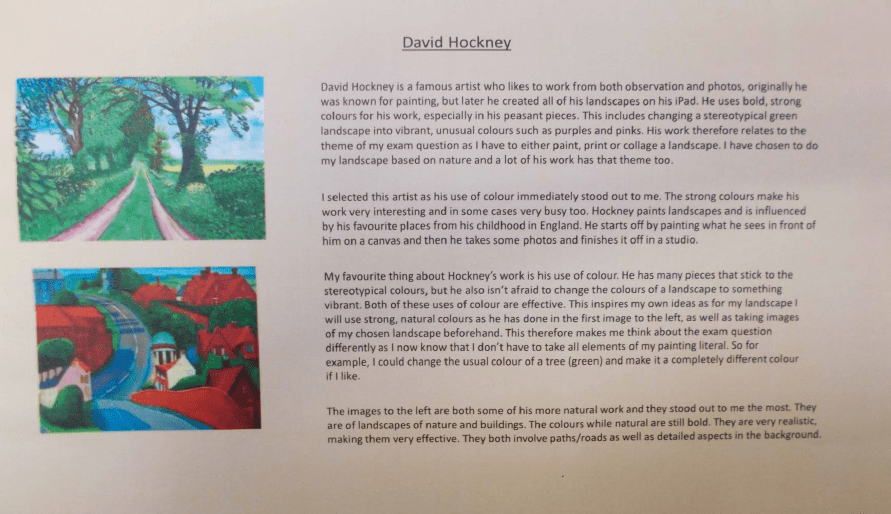
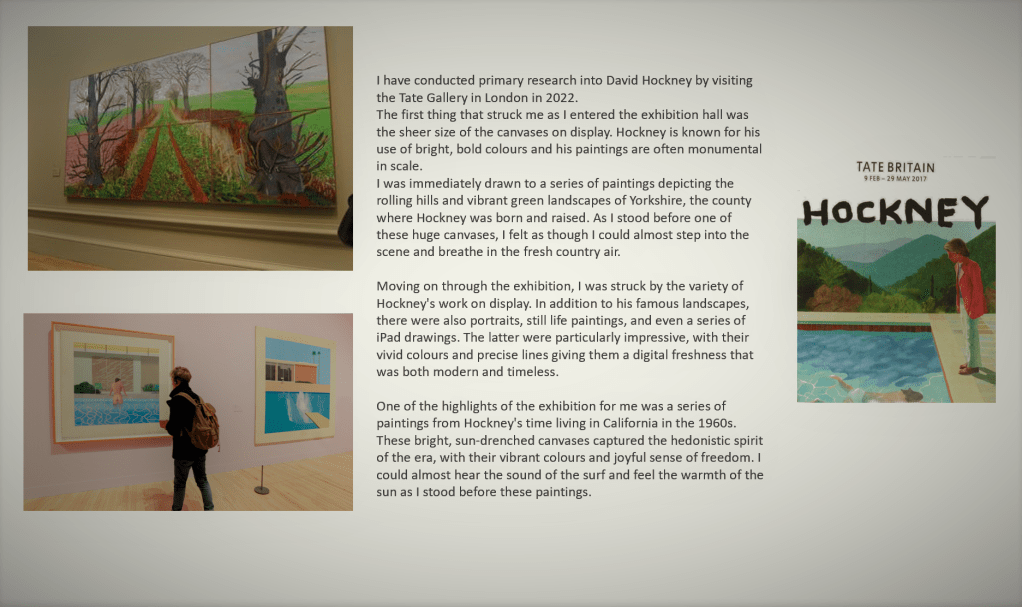
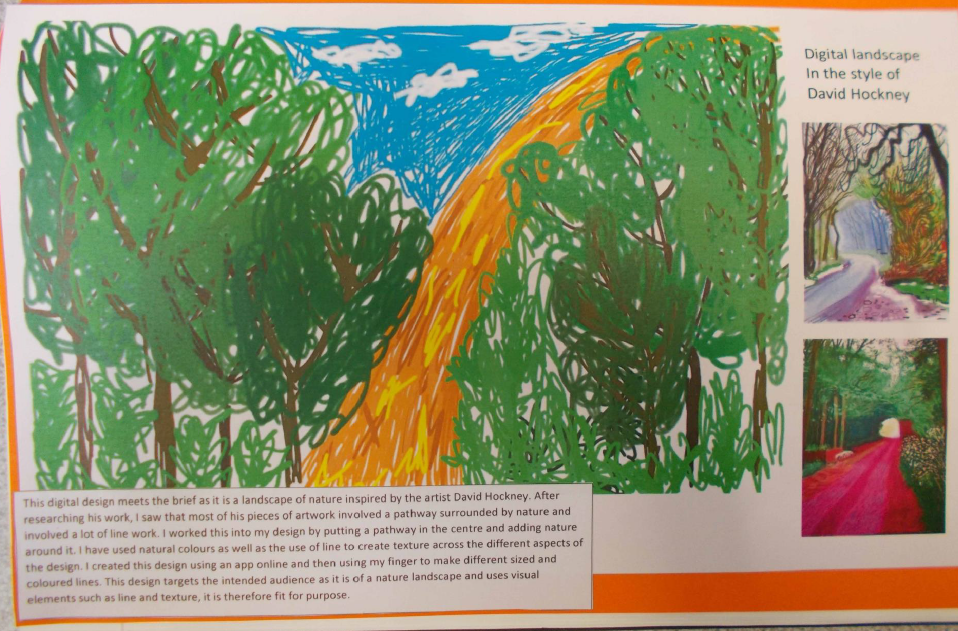
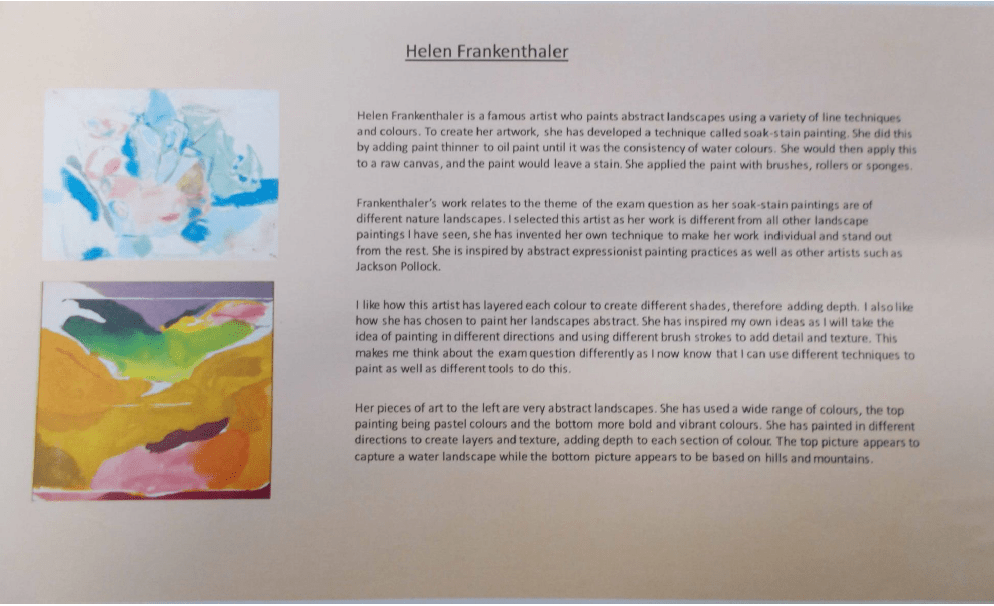
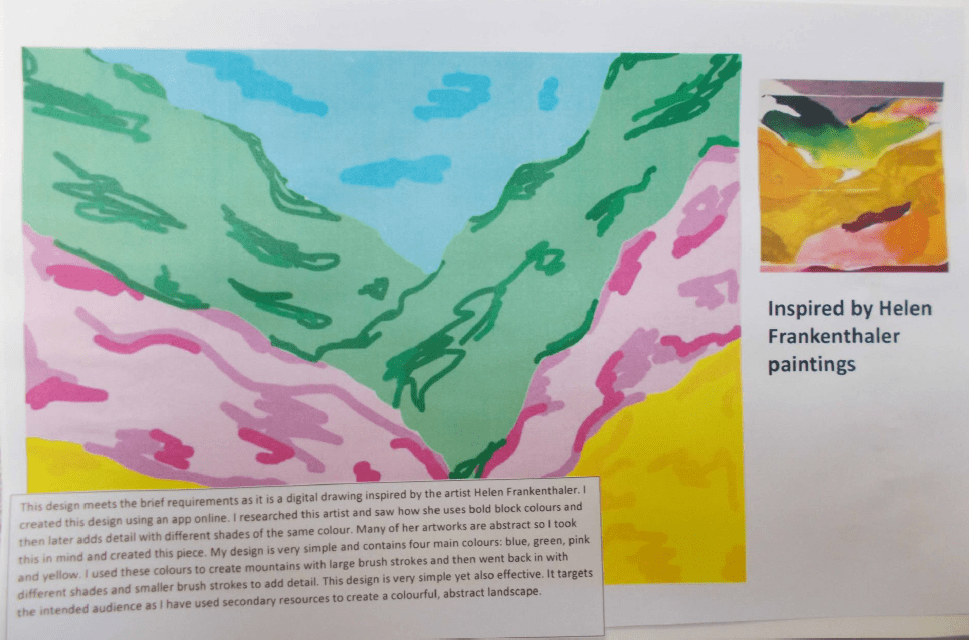
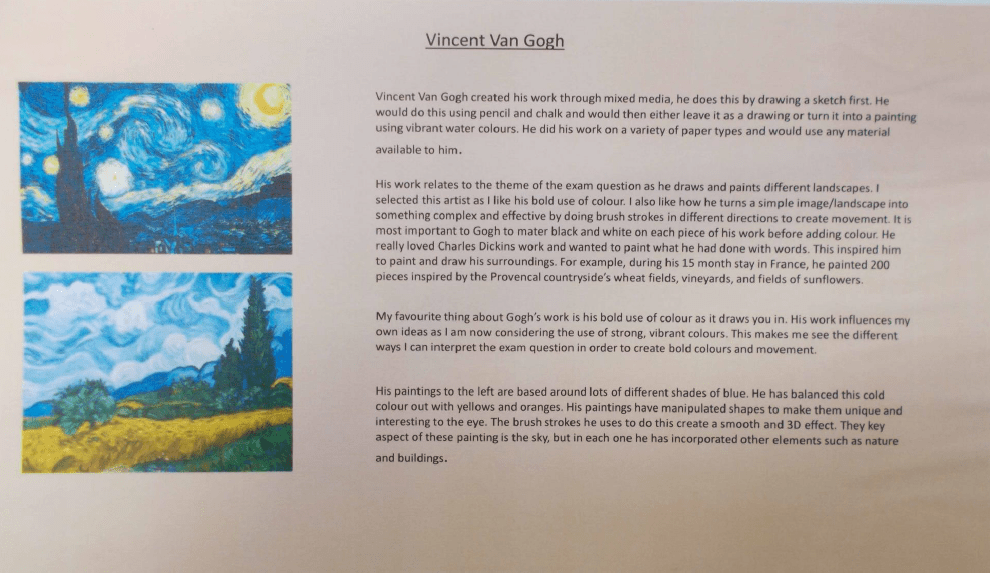
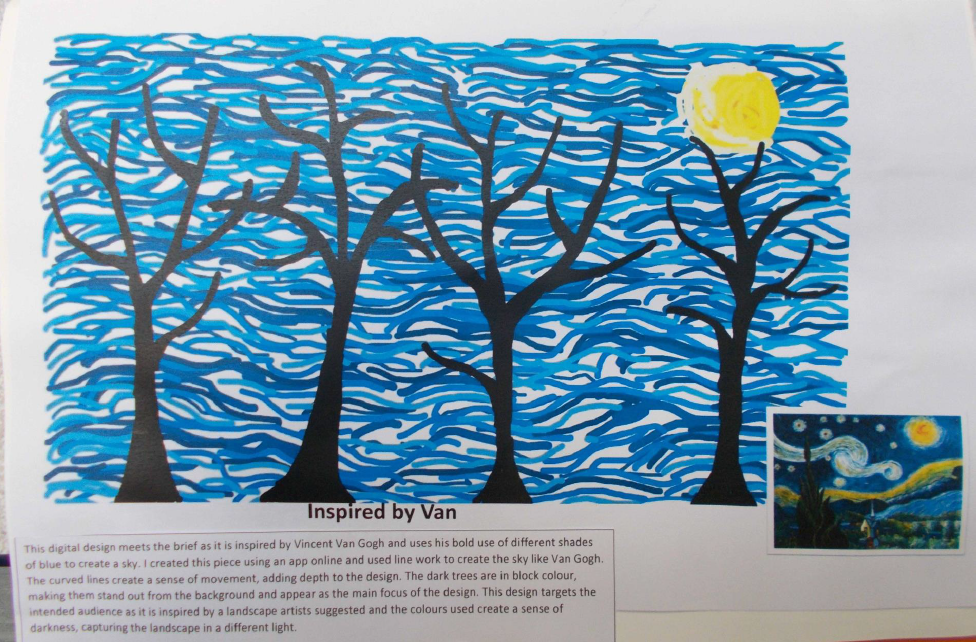
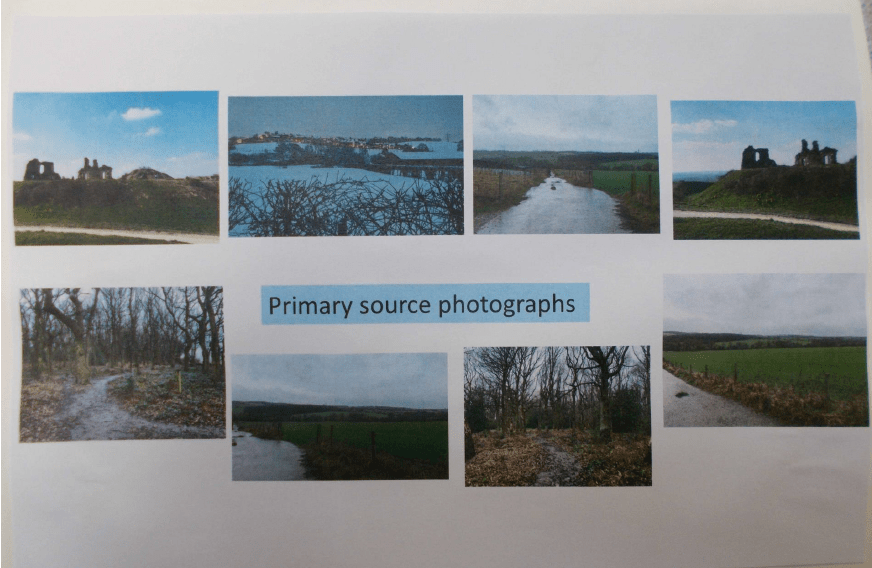
Hopefully you can see that this student first used a mind map to plan their investigations, then conducted research, and created artistic responses to three different, relevant artists.
These are the grades they achieved for this task / Learning Aim A:
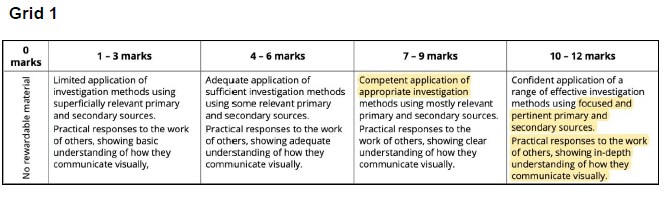
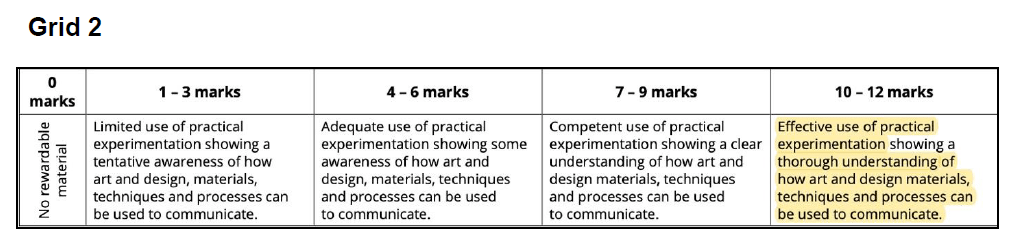
This is what the moderator said:
“The learner has conducted a competent and effective investigation into a range of relevant practitioners including Van Gogh, David Hockney and Helen Frankenthaler. The learner has produced a range of experimental pieces in different media in the style of the practitioners researched. These practical experiments provide evidence of an in-depth understanding of how these practitioners communicate visually. The learner has also gathered primary photographs to inform practical work. This places the work at the bottom of mark band 4 for this grid.“
“The learner has effectively experimented with a wide range of materials, techniques and processes including drawing, printmaking and digital applications. The experimentation demonstrates a thorough understanding of how materials, techniques and processes can be used to effectively communicate. Therefore, the work is placed in the middle of mark band 4 for this grid.“
Task 2 Ideas Generation (Learning Outcome B)
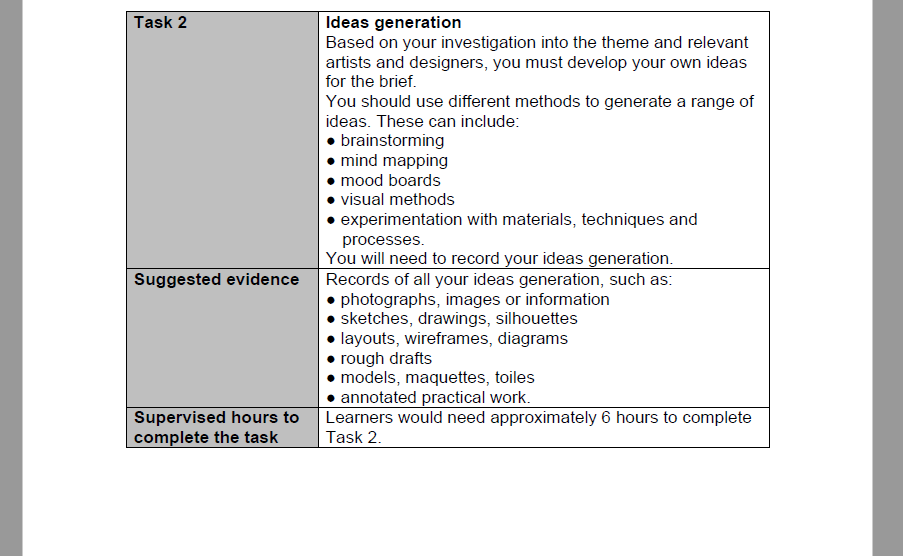
Examples from Task 2:
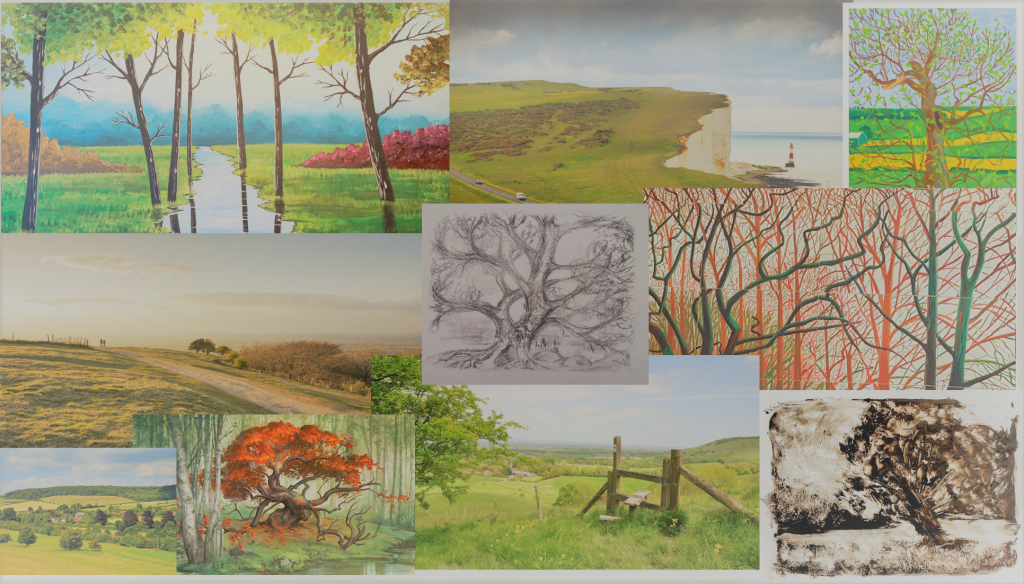
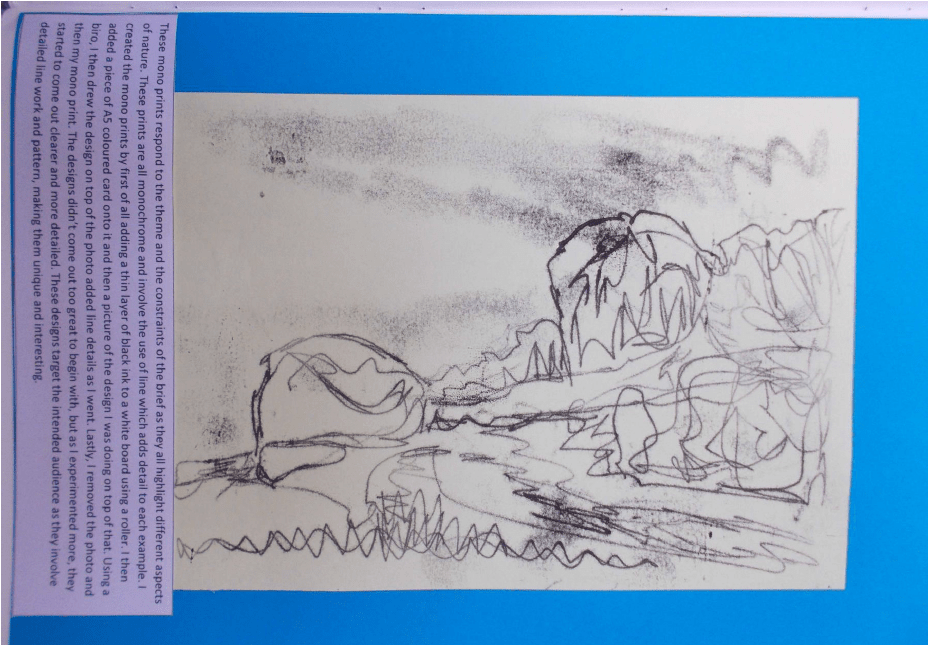
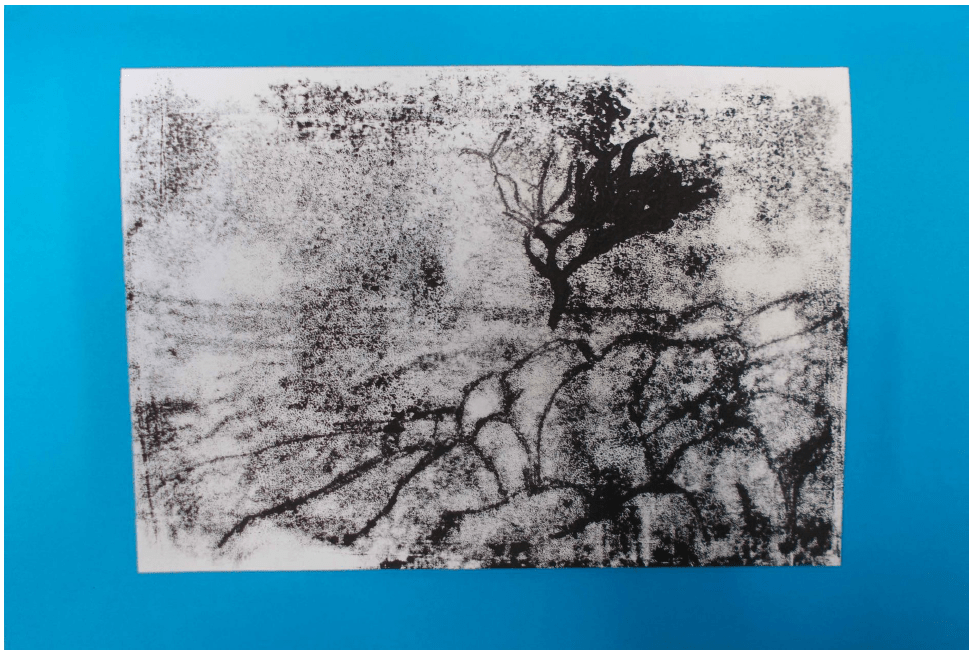
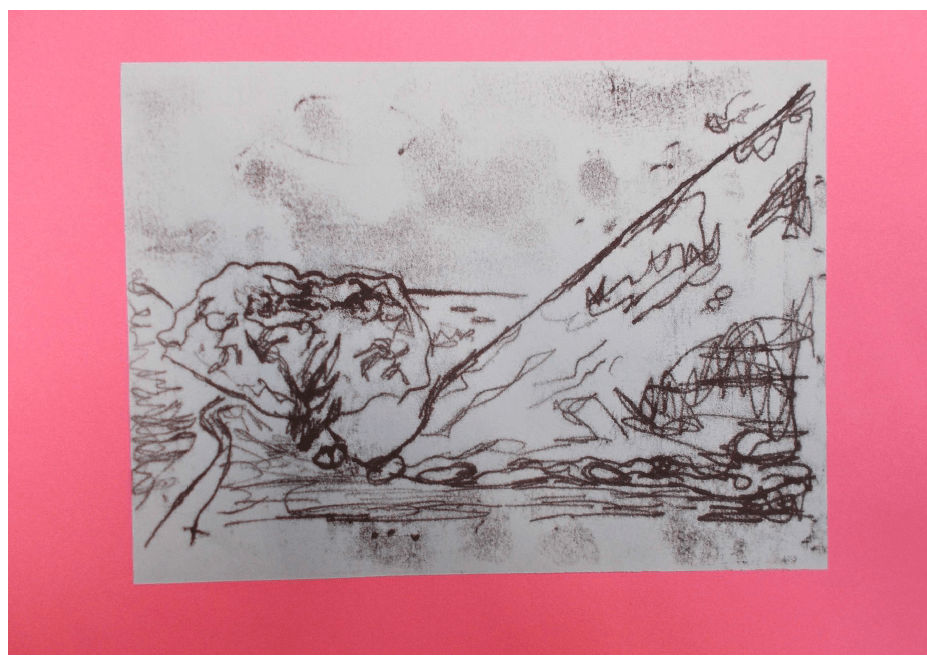
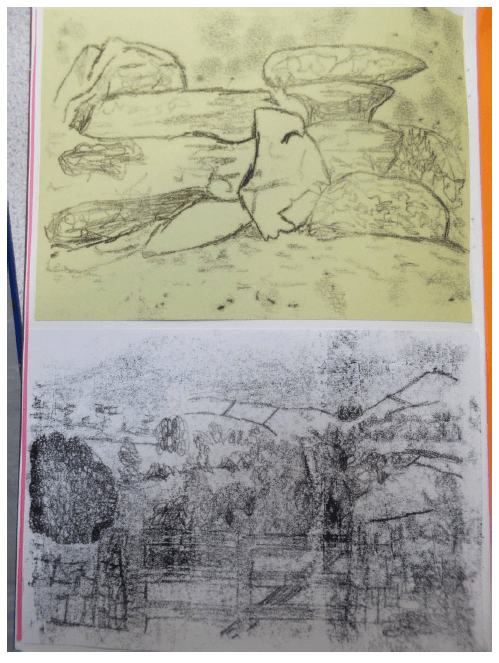
Task 2 shows a range of different art techniques being experimented with, all based around the theme of ‘Landscapes’ and guided by the mind map, and artist research in Task 1.
It is extremely important to keep the focus on the common theme throughout the assignment.
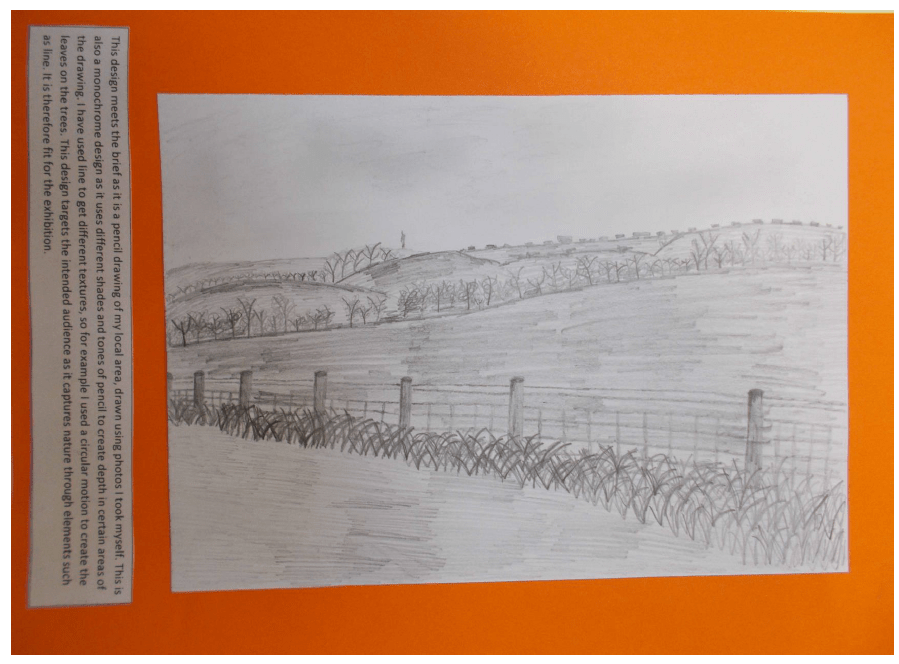
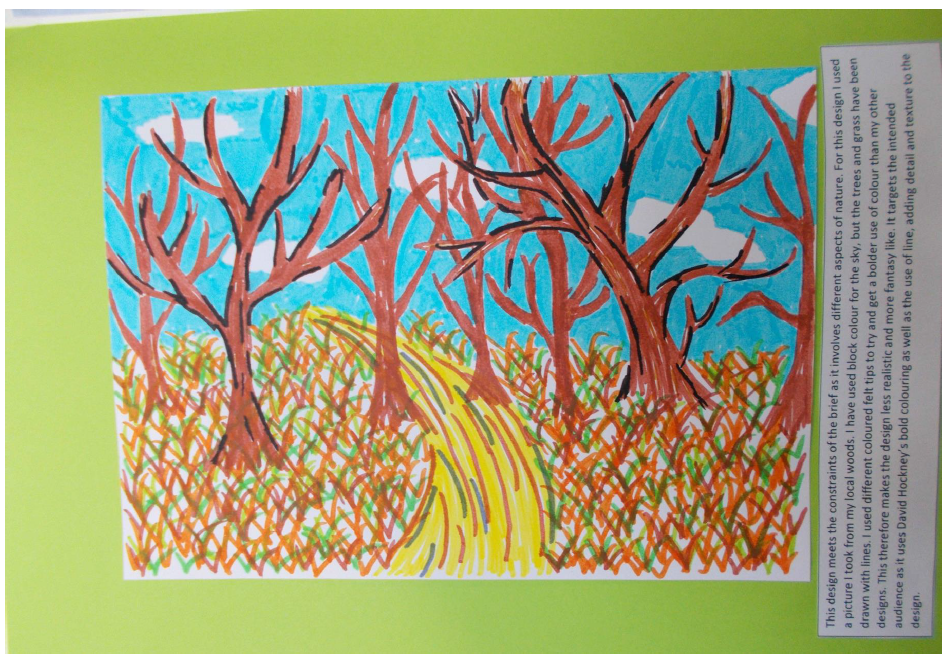
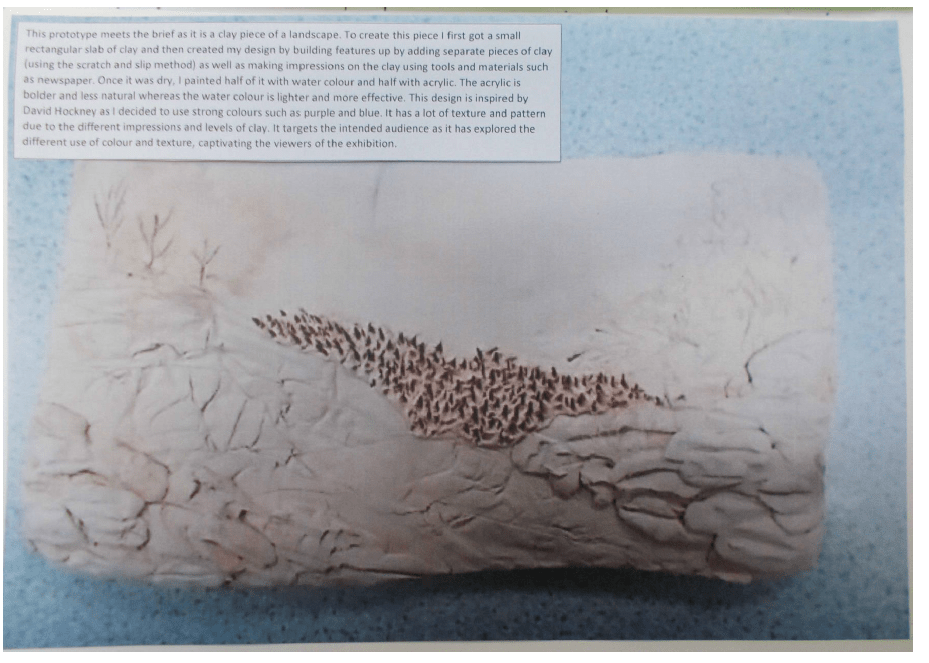
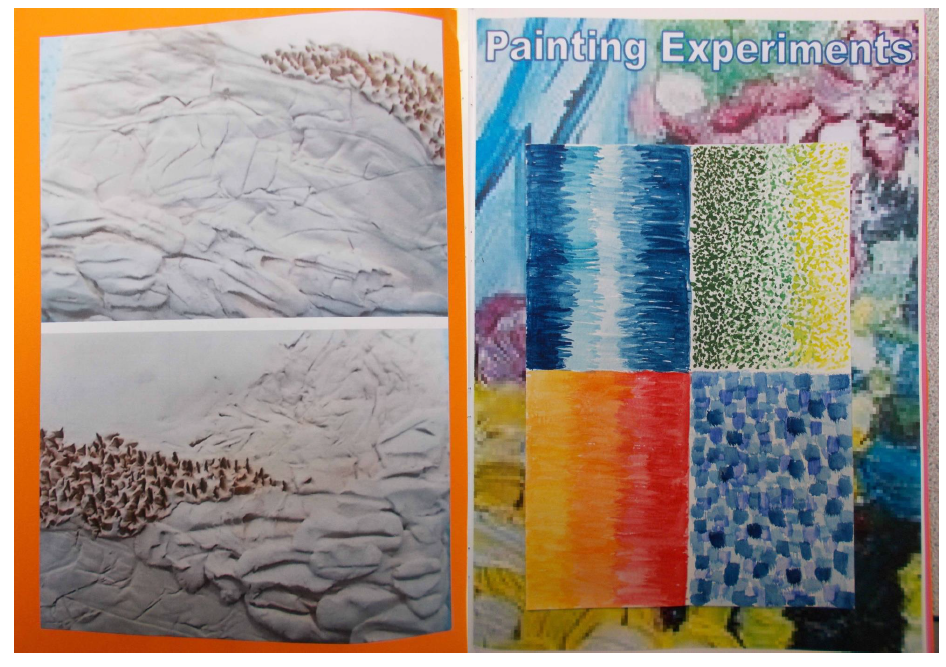
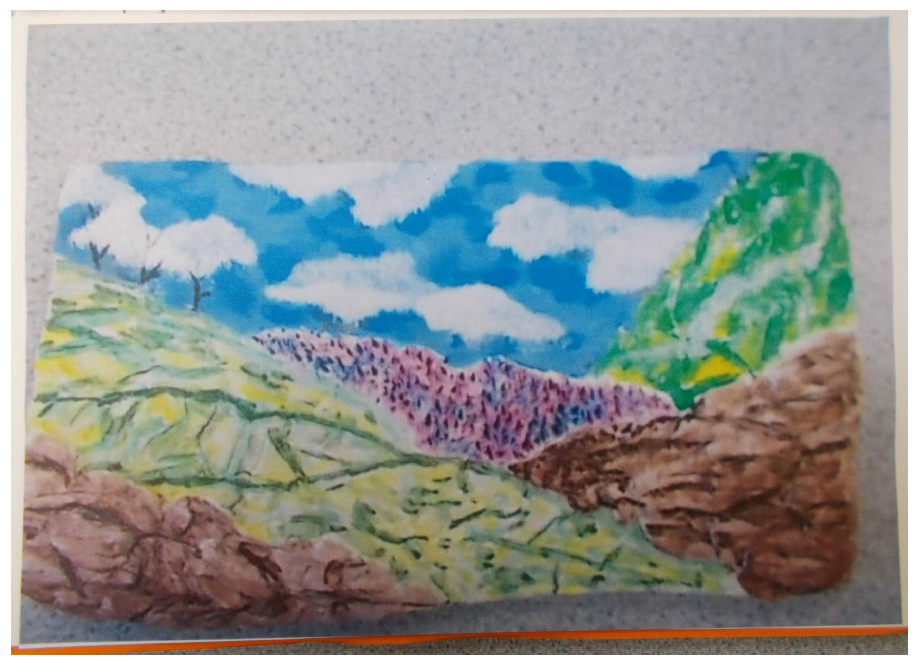
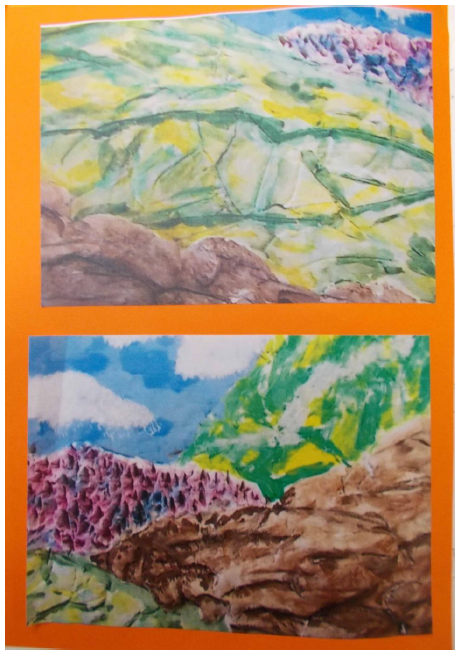
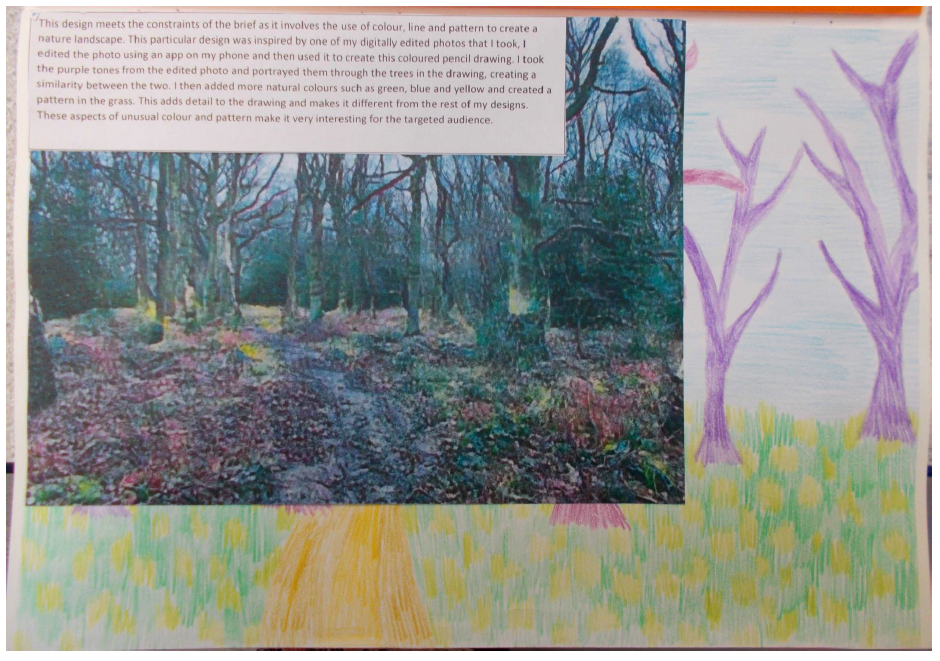
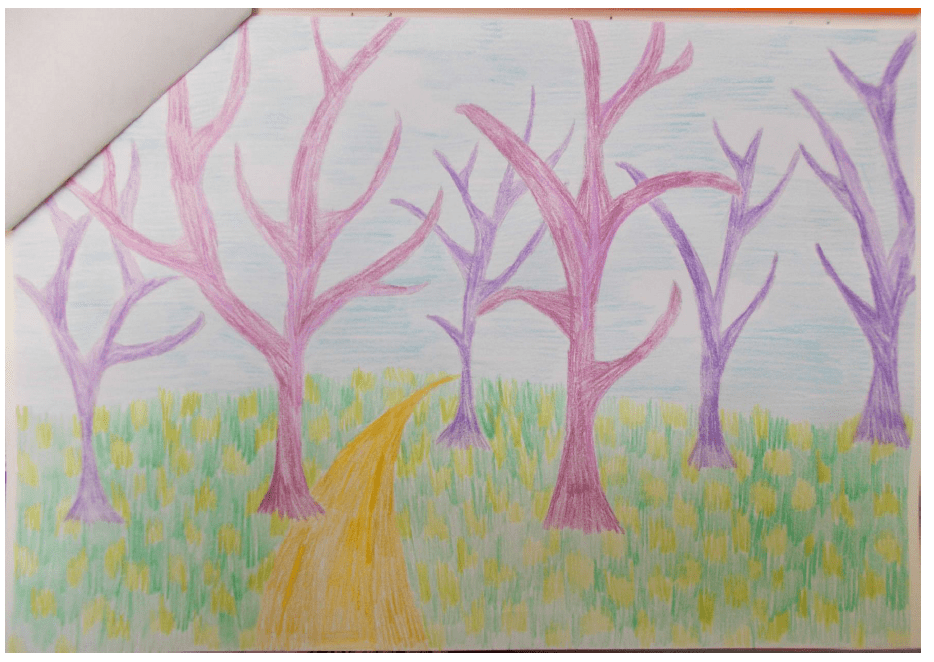
This is the grade awarded for Task 2:
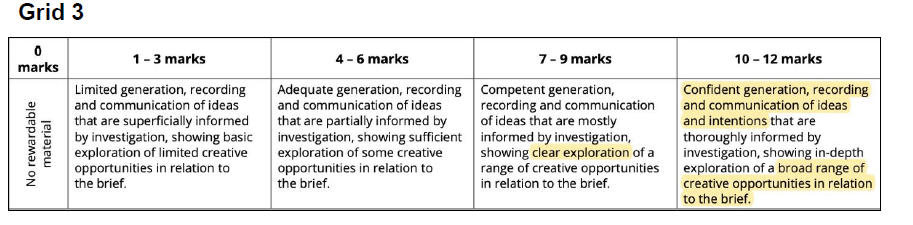
The moderator gave this feedback:
“The portfolio demonstrates that the learner has confidently generated ideas in response to the theme of the brief. These ideas have been thoroughly informed by the learner’s earlier investigation. The learner has explored a range of creative opportunities in relation to the brief and ideas and intentions for the project have been clearly communicated. Therefore, the work is placed at the bottom of mark band 4 for this grid.“
Task 3 Development and Creation ( Learning Outcome C)
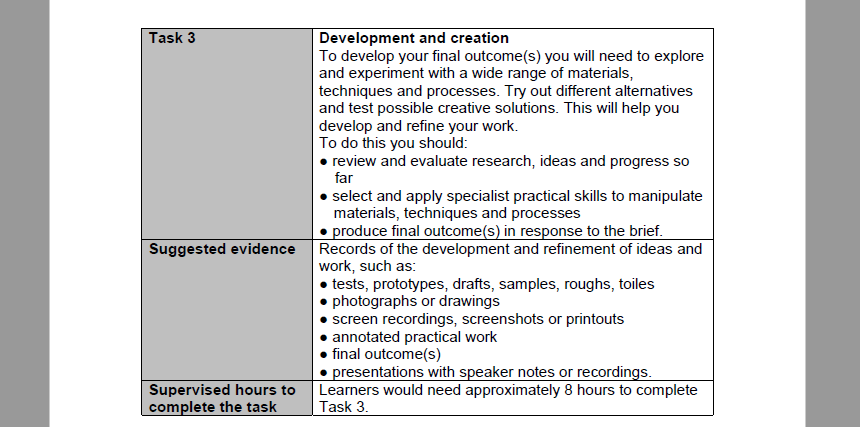
This task is a more focussed study into the final design that the student will make, ending with the creation of the finished artwork that was requested at the start of the assignment – in this example a response to the theme of ‘Landscape’

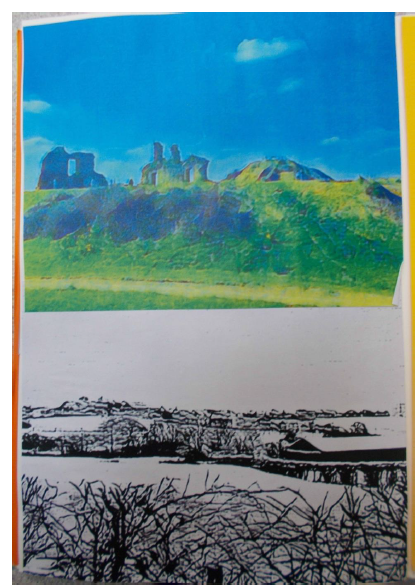
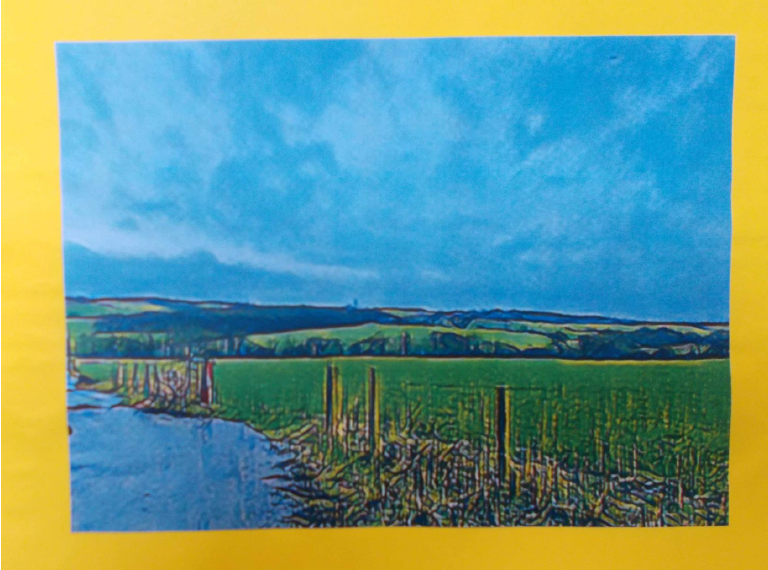
The student is still experimenting with different styles and techniques but is now focussing on a much more specific subject :
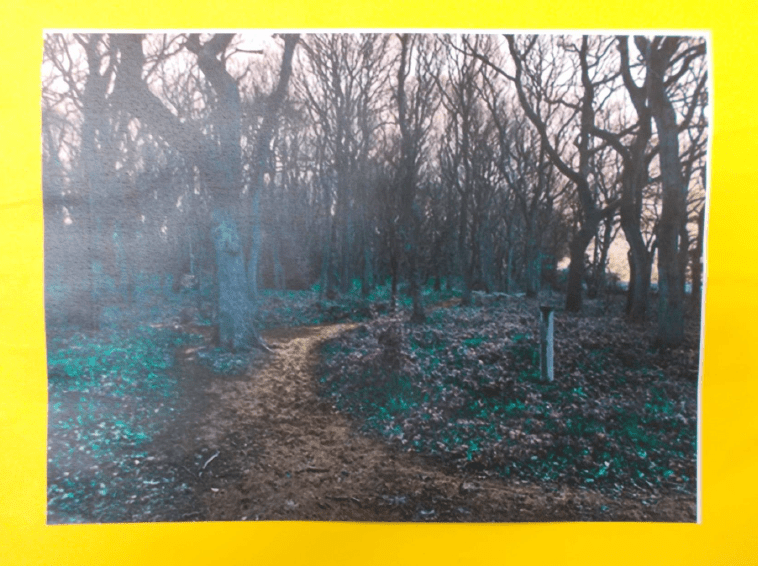
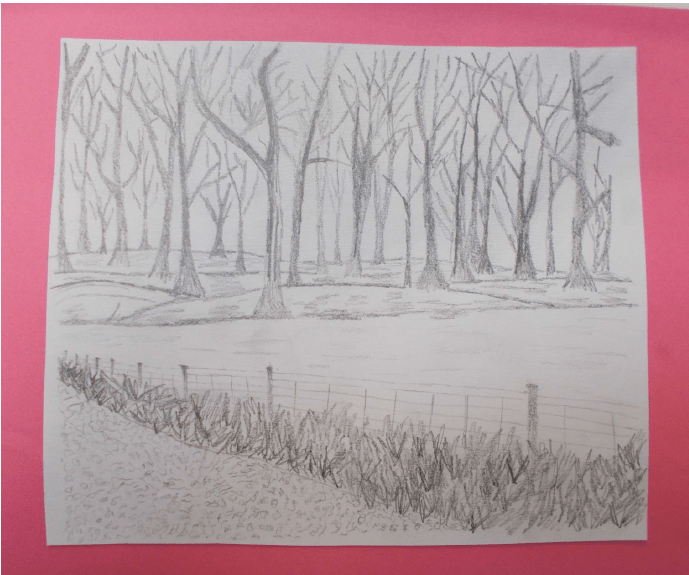
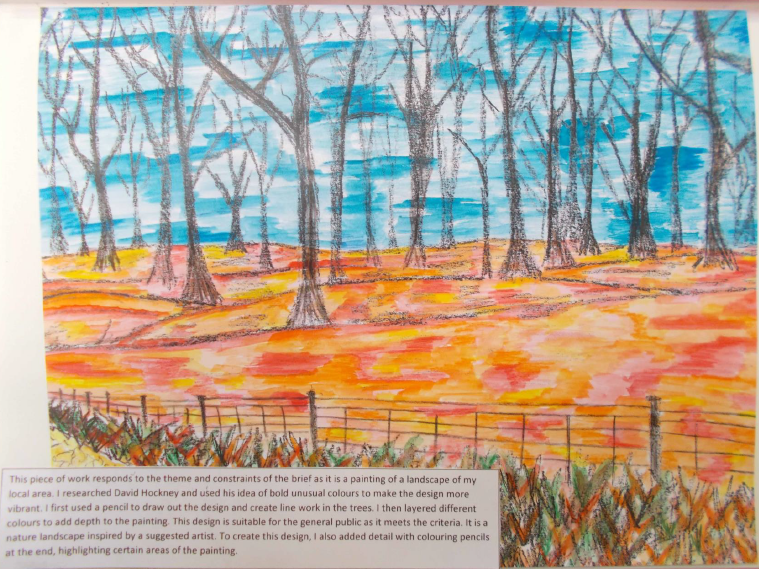
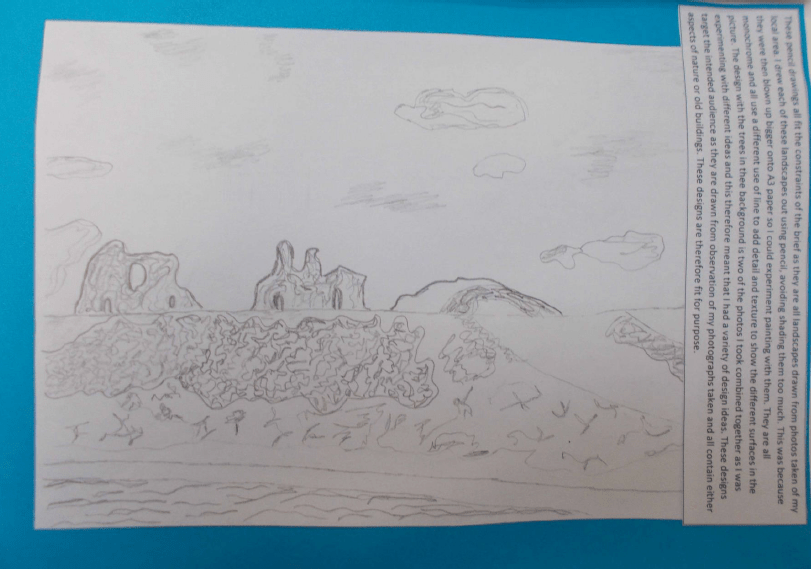
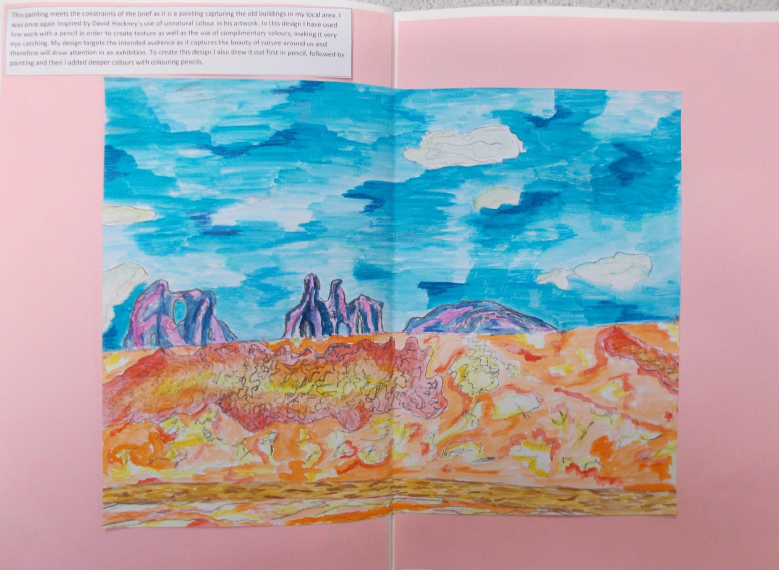
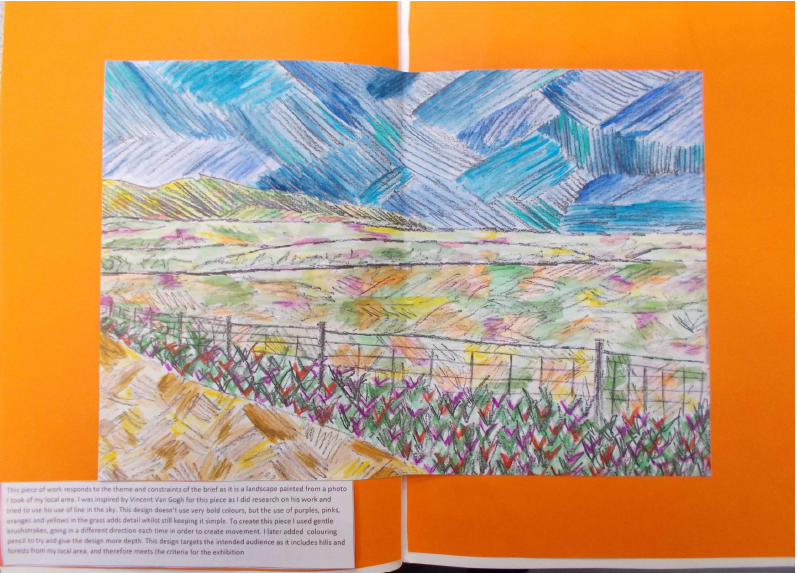
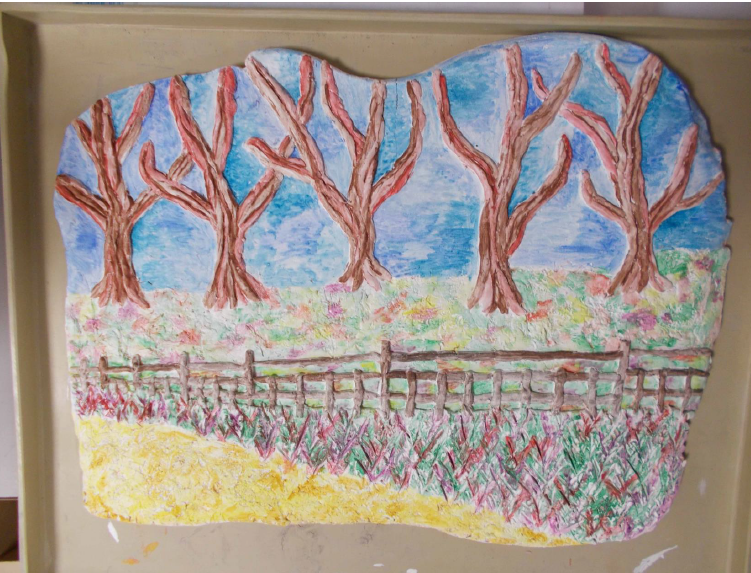
Their final outcome is a larger mixed media piece that builds on all of the previous techniques and formal elements – there is a clear link between this last artwork meant for display, and all of the developmental pieces that have come before it:
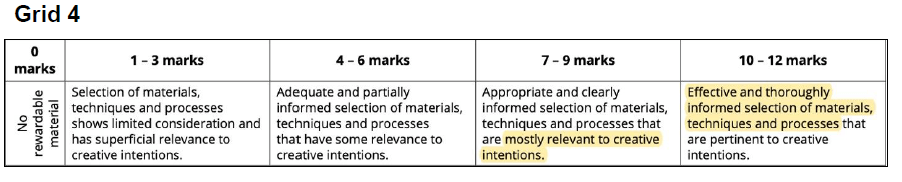
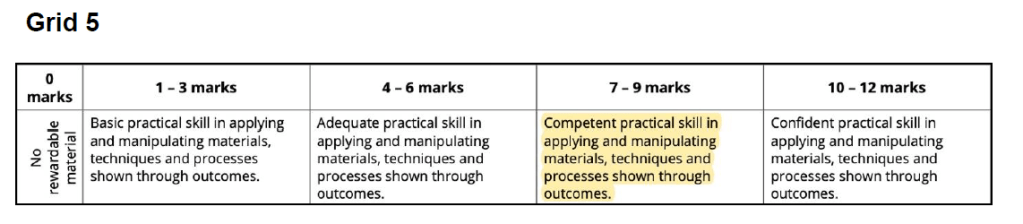
These are the final grades for Task 3:

The moderator said the following:
“The learner has selected an effective range of materials, techniques and processes to use, and these are clearly informed by experimentation and are mostly relevant to their creative intentions.“
“The learner’s final response demonstrates competent application of practical skills. Although some of the earlier experimental pieces appear to be more resolved, the final outcome does draw on earlier experimentation with relief work and mark making techniques. Therefore, the work is placed in the middle of mark band 3 for this grid.“
“The portfolio documents a competent application of development processes although at times this is a little repetitive. The final piece does demonstrate some refinement, but this could have been improved with further experimentation with the materials being used to produce the final outcome. Annotation throughout the portfolio demonstrate a competent review of activities undertaken.“
Task 4 Presentation (Learning Outcome D)
This is actually a fairly straightforward task, and one that most students will be completing well as they go along. It focusses on keeping the artwork portfolio and sketchbook well organised, and making sure every step is documented clearly. It also requires students to annotate their investigations and techniques thoroughly throughout – for this they can write by hand, or make use of laptops to type up, and print out their written work.
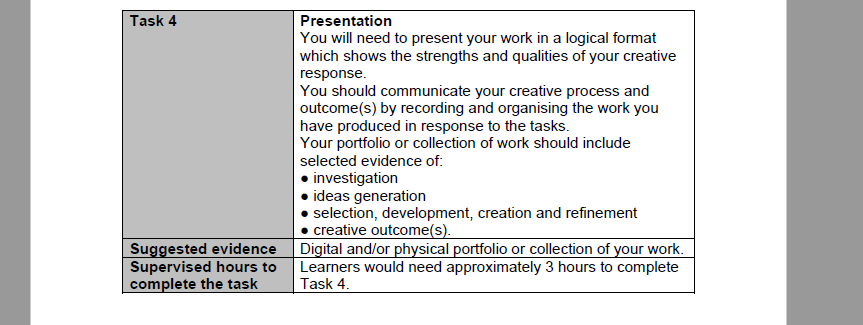
For learning aim D, although the boys are not required to put together a formal portfolio of work, they should make sure they present their work to best show the strengths and qualities of the work they have produced. As this forms part of the assessment criteria, this must be undertaken by learners and not by teachers.
The grade for this examples presentation is:
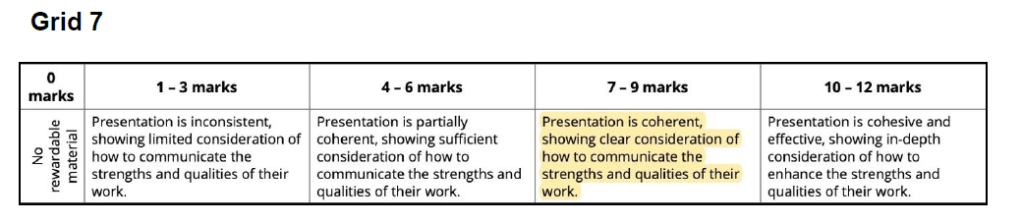
“The portfolio is coherent and demonstrates the learner has clearly considered presentation. At times the brightly coloured backgrounds to the work are a little distracting but the learner has attempted to communicate the strengths and qualities of the work through the presentation. Therefore, the work is placed in the middle of mark band 3 for this grid.“
Useful Resources
Most of the Art resources and links that can be found in our website will be useful and applicable to the Component 1 assessment.
Below are a few specific ones that might be of immediate use to help in preparation for this project:
Much of the BTEC information for this guide comes direct from the qualification website, and the resources that are available from it – found here:





 Visual Arts